How Long Does Mold Remediation Take?
From a one-day bathroom job to a two-week whole-house remediation, here is what actually controls the timeline.
Not all mold in a Cape Coral home is black mold. Here is how to tell the difference and what actually matters for your health and your home.
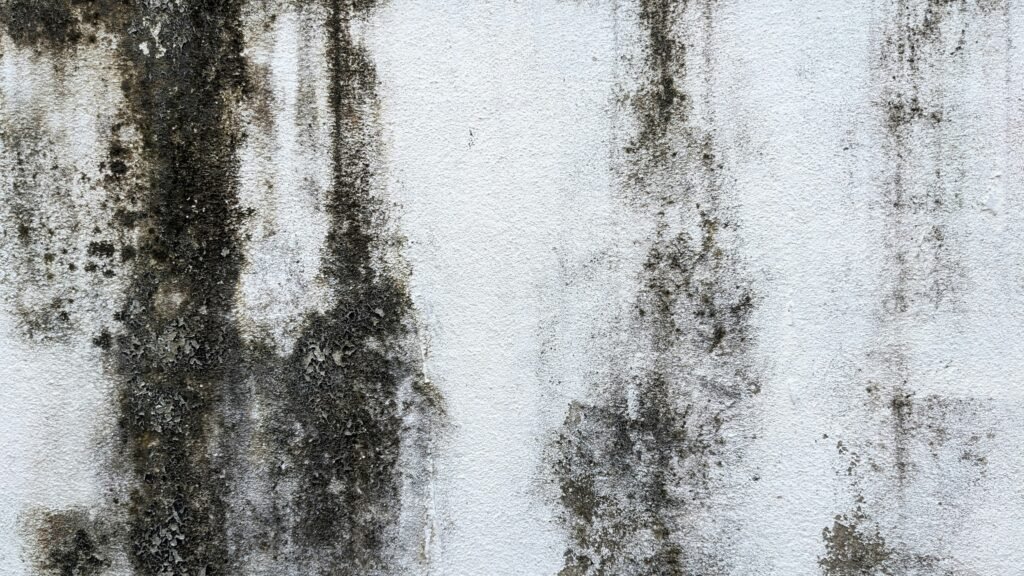
“Black mold” gets more attention than any other kind, mostly because of a handful of news stories from the 1990s linking it to serious illness. The name usually refers to Stachybotrys chartarum, a specific mold species that happens to be dark colored and grows best in spots that stay wet for a long time.
The problem is that plenty of common, far less concerning molds are also dark in color. A homeowner finding a dark patch under a sink or behind a baseboard has no reliable way to know which one they are looking at just from the color, and guessing wrong in either direction causes problems, either unnecessary panic or ignoring something that needed attention.
Most mold found in Cape Coral homes is ordinary household mold from species like Cladosporium, Penicillium, or Aspergillus. It usually shows up as green, gray, white, or orange patches, often with a fuzzy or powdery texture, and it tends to grow wherever humidity or condensation lingers.
Bathroom grout, window sills, AC vents, and closets with poor airflow are the usual spots. This type of mold is common enough that finding a small patch does not automatically mean something has gone badly wrong with the house, it often just means moisture sat somewhere a little too long.
Stachybotrys tends to look dark greenish-black rather than pure black, and it often has a slimy or wet appearance when it is actively growing, drying out to a duller, more powdery look as the moisture source fades. It needs constant moisture over many days to establish itself, not just occasional humidity.
Because of that requirement, it shows up most often behind drywall, under carpet padding, or inside wall cavities where a slow leak or long-term water intrusion has gone unnoticed, rather than on an exposed bathroom tile that dries out between showers.
Here is the same information laid out for a quicker comparison.
| Trait | Regular Household Mold | Stachybotrys (“Black Mold”) |
|---|---|---|
| Typical color | Green, gray, white, or orange | Dark greenish-black |
| Texture | Fuzzy or powdery | Slimy when active, chalky when dried out |
| Common spots | Grout, window sills, AC vents, closets | Behind drywall, under carpet, inside wall cavities |
| What it needs to grow | Occasional humidity or condensation | Constant moisture over many days |
| How you usually find it | Visible on an exposed surface | Often hidden until a wall or floor is opened up |
Less than most people assume. Every type of mold can trigger allergy-like symptoms in sensitive people, things like coughing, congestion, or skin irritation, and every type of mold should be removed rather than left to spread. Color alone does not reliably predict how a specific person will react.
What actually matters more than the species is the extent of the growth, how long it has been there, and whether the moisture source behind it has been fixed. A small, contained patch of any color is a much smaller problem than a large hidden colony of any color, dangerous-sounding name or not.
The practical steps are the same regardless of which type you are looking at. Do not touch or disturb it more than necessary, disturbing mold can release more spores into the air. Find and fix the moisture source, because mold keeps coming back until that happens. And have it properly identified and removed rather than guessing based on color from across the room.
A same-day inspection with moisture mapping tells you what you are actually dealing with, how far it has spread, and where the water is coming from, all in one visit.
A same-day inspection settles it.
A very small, isolated spot on a non-porous surface, like bathroom tile grout, can often be cleaned with a household cleaner and kept in check. Anything larger than roughly a square foot, anything on a porous material like drywall or carpet padding, and anything you cannot fully see the edges of is worth a professional inspection.
Found mold behind a wall or under flooring and want it properly identified and removed? See our Mold Remediation service in Cape Coral.
Not dramatically. Every mold type can cause allergy-like symptoms in sensitive people, and the size of the colony and how long it has been growing usually matter more than which species it is.
Not reliably. Several common, low-concern molds are dark colored, and lab testing is the only way to confirm species with certainty. Visual identification gives a reasonable guess, not a diagnosis.
There is no single color that reliably signals danger. Dark greenish-black growth in an area that has stayed wet for a long time is worth taking seriously, but so is a large colony of any color.
Only if you specifically need species confirmation, for a legal dispute or a sensitive medical situation, for example. For most homeowners, the more useful question is how much mold there is and what is causing it, which an inspection answers without lab testing.
Usually only when the mold followed a sudden, covered event like a burst pipe, not from long-term humidity or a leak that went unaddressed for months. We document the source and timeline to support your claim either way.
Found mold and not sure what it is? A same-day inspection settles it, anywhere in Cape Coral.
From a one-day bathroom job to a two-week whole-house remediation, here is what actually controls the timeline.
Read article →
A burst pipe or flooded room in Cape Coral, FL. Here's exactly what to do in the first 24 hours to protect your home...
Read article →
A storm can pass with no obvious leak and still leave water trapped behind walls and under floors. Here is what to check in...
Read article →