How much is gold worth today? This guide provides up-to-date gold prices, explains what influences these rates, and shows you how to calculate your gold’s value.
Key Takeaways
- The spot price of gold, which fluctuates frequently, is influenced by various factors, including market speculation, currency values, and global events, making real-time monitoring essential for investors.
- Calculating the value of gold involves weighing the gold accurately, determining its purity, and referencing the current market price to ensure accurate assessments for buying or selling.
- Different types of gold investments, such as physical gold and gold-backed ETFs, provide options tailored to investors’ preferences, each with its unique advantages and considerations.
Understanding Gold’s Market Value
The market value of gold, or the spot price, is the current rate at which gold can be bought or sold for immediate settlement. This spot price helps determine gold’s current worth, and it updates frequently, often every minute during trading hours. Imagine trying to catch a moving target; that’s how dynamic gold prices can be! Therefore, monitoring live gold prices, using tools like the Monex Bullion Investor app, is vital for anyone involved in the gold market.
Several factors, including market speculation, currency values, and global events, influence the spot price of gold. For instance, during times of economic instability, gold prices tend to rise as investors flock to this safe-haven asset, often monitoring the gold spot for price changes.
The scarcity of gold also plays a significant role in its intrinsic value, making it a precious commodity. Understanding these elements helps explain gold price fluctuations and how to leverage this knowledge in investments.
For official information on gold and precious metals, please visit the United States Geological Survey (USGS) Mineral Resources Program page on gold. Additionally, the U.S. Mint provides resources on gold coins and bullion.
Factors Influencing Gold Prices
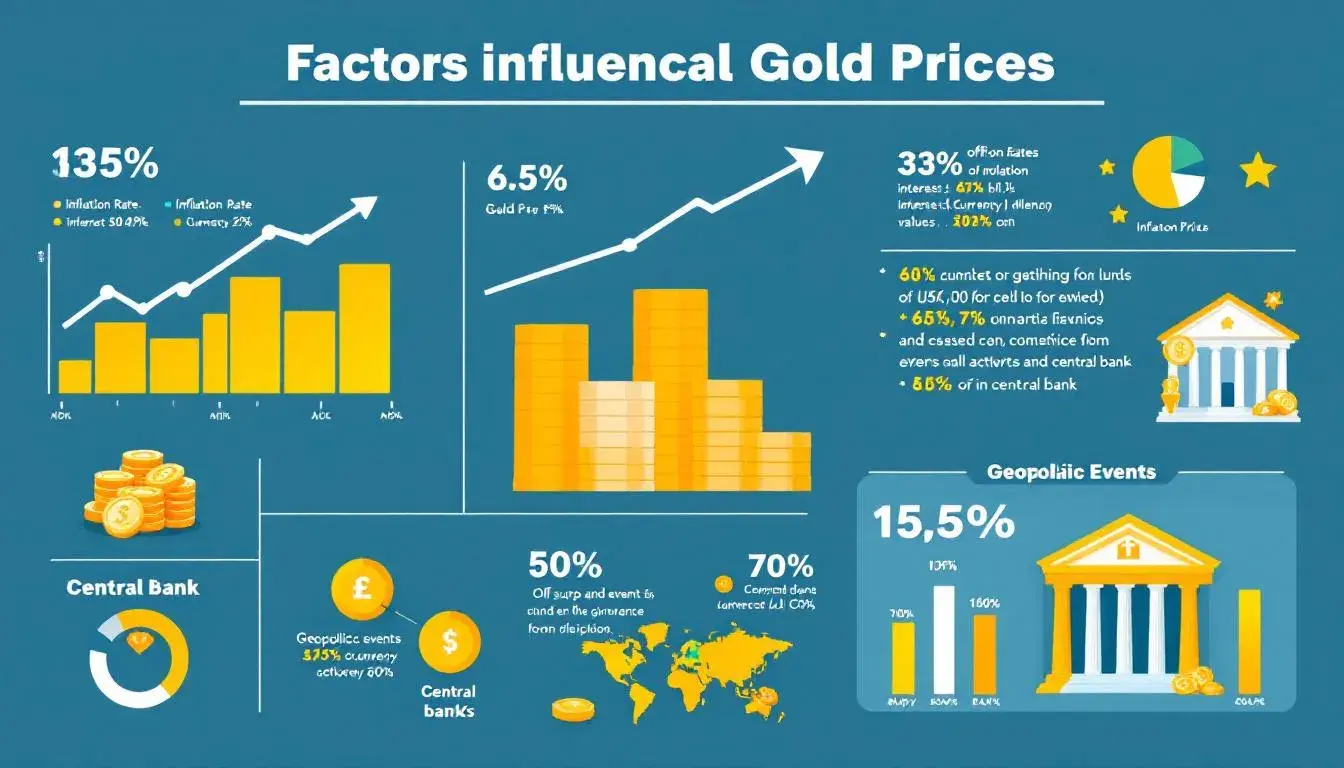
Numerous factors influence gold prices, each affecting the complex dynamics of supply and demand. During economic downturns, gold often shines brightest as investors seek a safe-haven asset to protect their wealth. This was evident during the financial crises of the past, where gold prices spiked as confidence in traditional assets waned.
Inflation and currency devaluation significantly impact gold prices. When inflation rises, the value of currency typically falls, making gold a more attractive investment as a hedge against devaluation. The US dollar’s strength is another factor; a stronger dollar can make gold pricier for foreign buyers, affecting global demand.
Geopolitical tensions and Federal Reserve interest rate decisions also play crucial roles. Geopolitical instability can drive up gold demand as investors seek safety amid uncertainty. Similarly, decisions to cut interest rates often boost interest in gold, as lower rates reduce the opportunity cost of holding non-yielding assets like gold.
Calculating the Value of Your Gold
Calculating the value of your gold involves three key steps: weighing your gold accurately, determining its purity, and finding the current market price. These steps ensure an accurate valuation, whether buying, selling, or appraising gold items.
Weighing Your Gold Accurately
The first step in calculating gold’s value is to weigh it accurately. Precision is paramount, and grams are the preferred unit for this purpose due to their accuracy. Traditional ounces can also be used, but remember that one troy ounce equals approximately 31.1 grams, slightly heavier than the standard ounce.
A reliable jewelry scale yields accurate measurements. It ensures consistency and precision, crucial for correct valuation. Whether you have gold bars, coins, or jewelry, measuring their weight and weights accurately sets the foundation to measure the next steps in the valuation process.
The National Institute of Standards and Technology (NIST) provides useful information and guidance on weights and measures.
Determining Gold Purity
Gold purity, often measured in gold karats, indicates how much of the metal is pure gold. Common karat values include:
- 10K
- 14K
- 18K
- 22K
- 24K (pure gold)
To identify the karat of your gold, look for stamps on the item, such as ‘14k’ or numerical markers like ‘585’, which indicate its purity.
If your gold lacks these markings, you can test its purity through a jeweler or use a home testing kit. Knowing the purity is crucial for accurately calculating the gold content and reflecting its true value.
Finding Current Market Price
The current market price of gold is usually available through:
- Financial news platforms
- Commodity exchanges
- A simple online search reveals the live spot price of gold, typically quoted in troy ounces
- Financial news websites or specialized gold price calculators that offer up-to-the-minute pricing, ensuring accurate valuation.
Remember, one troy ounce equals 31.1 grams, a crucial conversion for accurate gold price calculation, especially when considering one gram.
Gold Price Per Gram and Ounce
Knowing the gold price per gram and per ounce ensures accurate valuation of gold. As of November 15, 2025, the price of gold is approximately $4,095.19 per ounce and $131.66 per gram. This distinction is vital, especially for smaller quantities of gold.
The London Bullion Market Association (LBMA) establishes the official gold price through daily auctions, serving as a global benchmark. However, variations can occur across different platforms due to differences in data sources and update frequencies.
To convert gold prices, remember that 1 troy ounce equals approximately 31.1 grams, while a standard ounce equals 28.35 grams. This knowledge is crucial for accurately determining gold’s value, whether buying, selling, or investing.
Types of Gold Investments
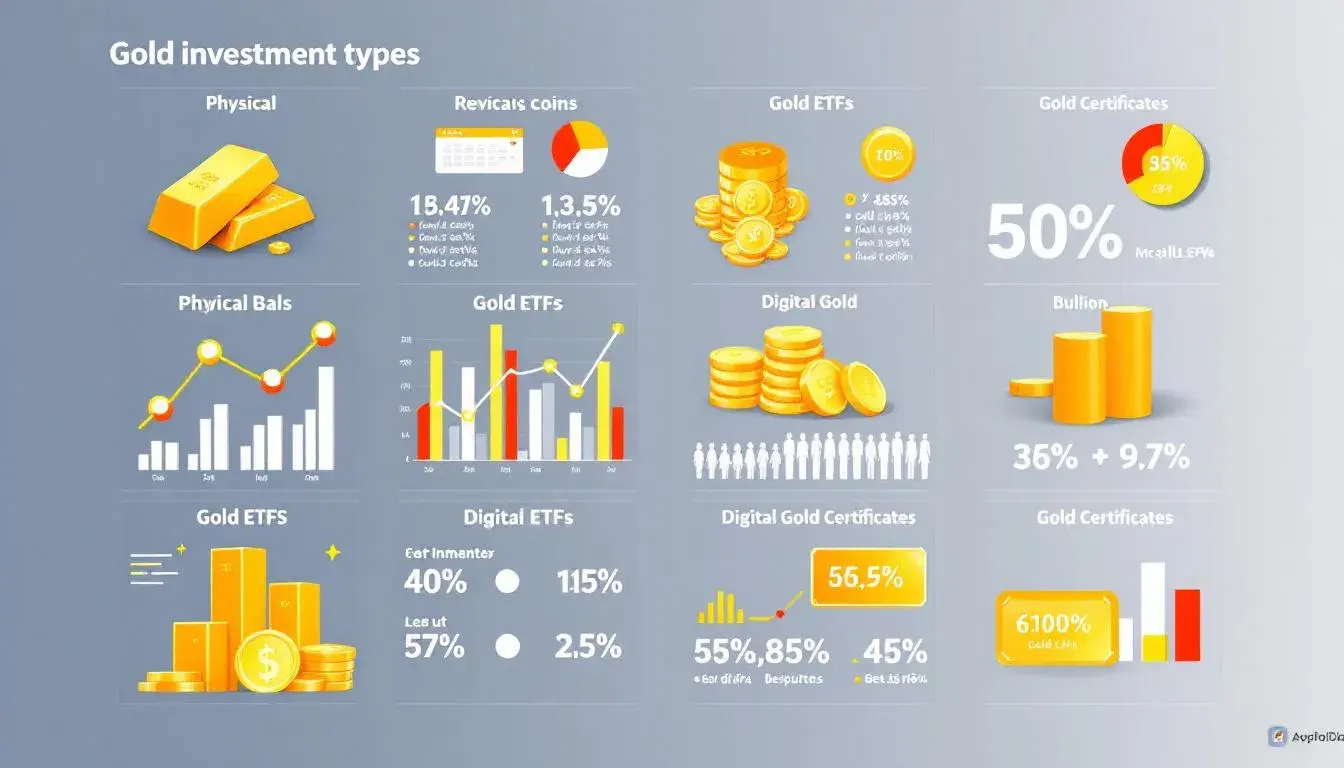
Gold investment takes various forms, each offering unique benefits. Physical gold investments, such as bullion bars and coins, provide tangible ownership and can be directly held. Gold certificates, on the other hand, indicate ownership of gold that is stored off-site, allowing investment without the need for physical storage.
Gold savings plans allow investors to accumulate gold gradually through regular, small purchases to buy gold. This gold-based approach makes it easier to invest in gold over time, diversifying your portfolio while mitigating risk.
Physical Gold vs. Gold ETFs
Owning physical gold offers tangible ownership and a reliable store of value. However, it comes with responsibilities such as taking delivery, storage, and insurance. Premiums for physical gold vary, ranging from 1% to 5% above the spot price for bars and 10% to 20% for rare coins.
Gold-backed ETFs offer:
- Ease of buying and selling without managing physical inventory
- Lower annual management fees, typically ranging from 0.25% to 0.40%, make them a cost-effective investment option
- Distinct advantages and drawbacks for each option, allowing investors to choose based on preferences and goals
Selling Gold: What You Need to Know
When selling gold, knowing the melt price is crucial. The melt price represents the raw value of gold if melted down, disregarding craftsmanship and brand. Cash-for-gold buyers typically offer 75-85% of the melt value, though in less competitive markets, it can start as low as 15%.
Selling gold jewelry often yields lower offers, ranging from 35% to 40% of the melt value of scrap gold. Local buyers may offer higher percentages, sometimes up to 80% for larger lots.
Understanding these dynamics helps consumers navigate the market and secure the best offers when selling gold.
The Impact of Craftsmanship on Gold Jewelry Value
Craftsmanship greatly impacts the resale value of gold jewelry. The artistry and unique design of a piece can enhance its perceived value beyond the intrinsic worth of the gold. Jewelry from reputable brands or with distinctive craftsmanship often commands higher resale prices.
Condition and artistic merit are crucial factors that appraisers consider when evaluating gold jewelry for resale. Therefore, the value of gold jewelry lies in its material, craftsmanship, and brand reputation.
Historical Trends in Gold Prices
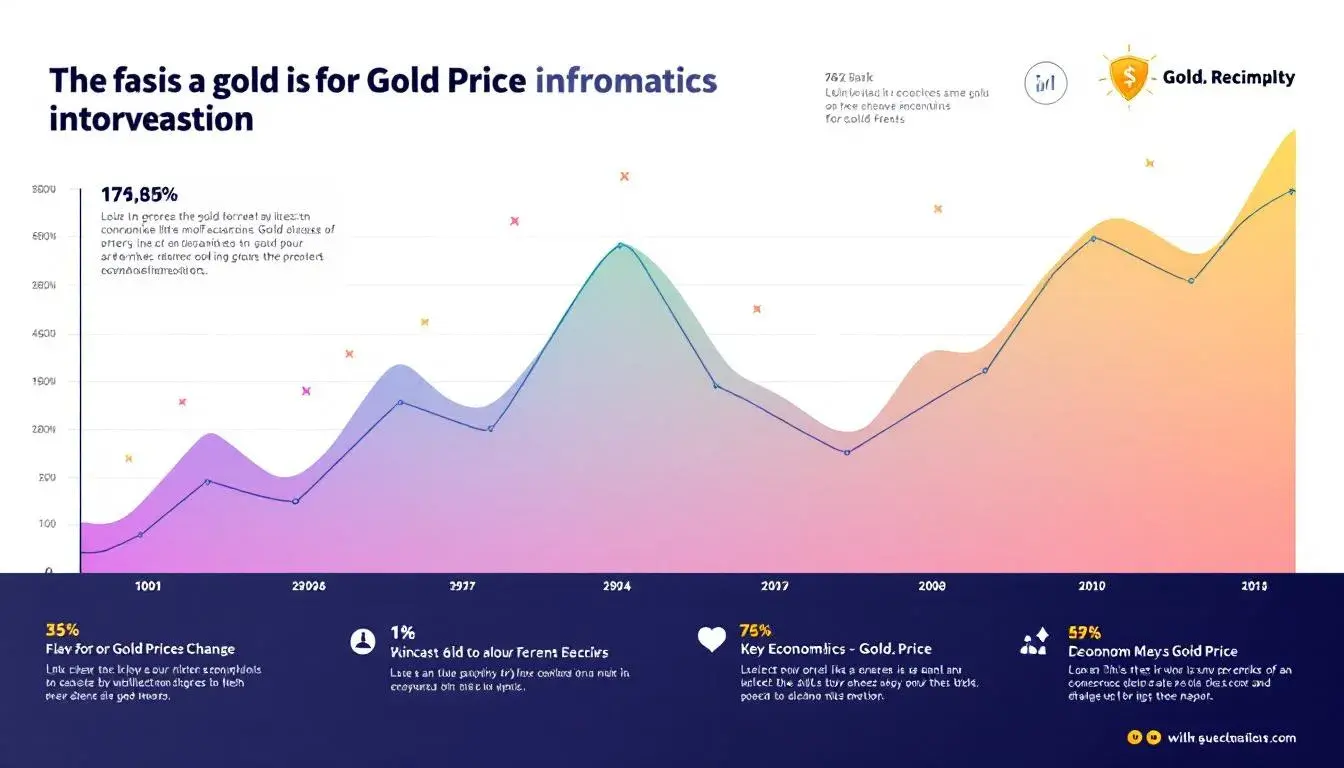
Gold prices have a rich history, influenced by numerous key events. The creation of the first gold coins around 700 BC and the hoarding of gold by central banks are notable milestones. Over the last fifty years, gold prices have surged from 35 USD to the current market value per troy ounce.
The introduction of the gold standard in the 19th century significantly stabilized gold prices, offering a historical precedent for gold’s value as a stable investment. Understanding these trends offers insights into the factors driving gold prices over time.
Other Precious Metals
While gold often takes center stage, other precious metals like silver also play a significant role in the market. Currently, silver is priced at approximately 50.47 dollars per ounce, a decrease of 3.32%. Silver is widely traded and often compared to gold in terms of market demand and price fluctuations.
Diversifying your investment portfolio with other precious metals can offer additional stability and potential returns for your money.
Using a Gold Price Calculator
A gold price calculator is an invaluable tool for anyone dealing with gold. It:
- Computes the market value based on the current gold rate
- Supports various weight units, including grams, ounces, and tolas
- Allows input of the gold’s purity and weight
- Computes the value instantly
Gold price updates occur every minute, ensuring you get accurate and up-to-date pricing in just a few seconds. If you want to calculate gold price or scrap gold price, then an online gold value calculator boosts confidence with accurate pricing and instant results, facilitating informed decisions.
Check Your Gold’s True Value Instantly
Use our online calculators to get accurate real-time Gold Value and Scrap Gold Value in seconds.
Summary
Understanding the value of gold today involves grasping market dynamics, accurately calculating weight and purity, and staying updated with current prices. From physical gold investments to gold ETFs and the impact of craftsmanship on jewelry value, this guide has covered the essentials.
As you navigate the glittering world of gold, remember the importance of informed decision-making. Whether buying, selling, or investing, knowledge is your best asset. Embrace the journey, and may your investments shine as brightly as gold itself.
Frequently Asked Questions
How often do gold prices update?
Gold prices update every minute during trading hours to ensure accuracy in reflecting real-time market conditions. This frequent adjustment allows investors to make informed decisions based on the latest market data.
What is the difference between a troy ounce and a regular ounce?
The primary difference between a troy ounce and a regular ounce lies in their weight; a troy ounce is approximately 31.1 grams, whereas a regular ounce is 28.35 grams. This distinction is particularly important in contexts such as precious metals and gemstones.
How do I determine the purity of my gold?
To determine the purity of your gold, inspect the item for karat stamps; if they are missing, consult a jeweler or utilize a home testing kit for an accurate assessment.
Why do gold prices rise during economic downturns?
Gold prices rise during economic downturns because it is viewed as a safe-haven asset, resulting in increased demand amid uncertainty. This tendency underscores gold’s role as a protective investment during financial turmoil.
What factors affect the resale value of gold jewelry?
The resale value of gold jewelry is primarily influenced by craftsmanship, brand reputation, and the condition of the piece. These factors play a crucial role in determining how much you can expect to receive when selling.